
Your face tells your story, but it doesn’t have to reveal every passing year. Ageing gradually changes the way our face looks.
Skin loses elasticity, facial fat shifts downward, and collagen production slows, leading to sagging cheeks, jowls, deeper folds around the mouth, and loose skin along the neck.
While non-surgical treatments can improve early signs of ageing, they cannot reposition underlying tissues once significant sagging occurs. For early signs of ageing, Botox and Fillers in Dubai can offer subtle refreshment with no downtime.
Facelift surgery in Dubai is a highly effective way to restore youthful facial contours while preserving your natural features.
Rather than changing how you look, a facelift refreshes your appearance by lifting sagging tissues, redefining the jawline, and creating smoother, firmer contours that still look like you.
Whether you’re considering a traditional facelift or a deep plane facelift in Dubai, every treatment plan is carefully personalised to suit your facial anatomy and aesthetic goals.
What is a Facelift?

A facelift in Dubai (rhytidectomy) is a cosmetic surgical procedure that lifts and repositions facial tissues affected by ageing.
Instead of simply tightening the skin, modern facelift techniques restore the deeper facial support structures to create long-lasting, natural-looking rejuvenation.
During facelift surgery in Dubai, excess skin is carefully removed while the underlying muscles and connective tissues are repositioned to restore youthful facial definition.
A facelift can improve:
- Sagging cheeks
- Jowls along the jawline
- Deep nasolabial folds
- Marionette lines
- Loose skin around the neck
- Loss of jawline definition
- Facial laxity caused by ageing
Many patients choose to combine their facelift with eyelid surgery, brow lift, fat grafting, or neck lift for more comprehensive facial rejuvenation. Tired or heavy eyelids can be refined with Blepharoplasty.
If you’re exploring facelift in Dubai, understanding these elements ensures you’re well-informed for your journey.
Benefits of Facelift Surgery in Dubai
Modern facelift surgery offers far more than tighter skin. By addressing the deeper structures of the face, patients can achieve subtle yet noticeable rejuvenation.
Benefits include:
- Helps your face look more youthful and refreshed
- Gives your jawline a more defined look
- Lifts and firms sagging cheeks
- Minimizes the appearance of jowls
- Smooths out deep folds in the face
- Tightens skin on the neck for a firmer look
- Provides results that look balanced and natural
- Delivers improvements that can last 10 years or more
- Boosts your confidence while keeping your appearance natural
When performed by the best facelift surgeon in Dubai, the results enhance your existing features rather than changing your identity. See How Long Does a Deep Plane Facelift Last for a closer look at longevity.
Who is a Good Candidate for a Facelift in Dubai?
You may be a suitable candidate for a facelift in Dubai if you:
- Have noticeable sagging of the lower face
- Have jowls or an undefined jawline
- Notice loose skin around the neck
- Have deep folds between the nose and mouth
- Want long-lasting facial rejuvenation
- Are in good overall health
- Have realistic expectations about surgical outcomes
Patients are commonly in their 40s, 50s, or 60s, although suitability depends more on facial ageing than age alone. During your consultation, Dr Adel will assess:
- Skin quality
- Facial volume
- Bone structure
- Degree of skin laxity
- Medical history
- Lifestyle factors
This detailed evaluation helps determine the most appropriate facelift technique for your needs.
Types of Facelift Surgery

Different facelift techniques are designed to address different stages of facial ageing. Choosing the right procedure depends on your anatomy, skin quality, and desired outcome.
Deep Plane Facelift in Dubai
A deep plane facelift in Dubai is one of the most advanced facial rejuvenation techniques available today.
Rather than pulling the skin tighter, this procedure releases and repositions the deeper facial tissues (SMAS and retaining ligaments), allowing the cheeks, jawline, and neck to be lifted as a single unit. Compare Deep Plane Facelift vs SMAS Facelift to see how the techniques differ.
This approach creates:
- More natural movement
- Less tension on the skin
- Better mid-face rejuvenation
- Improved jawline definition
- Softer nasolabial folds
- Longer-lasting results
Patients often choose this technique because it avoids the “over-pulled” appearance associated with older facelift methods.
Traditional Facelift
A traditional facelift treats moderate to advanced facial ageing by lifting facial tissues and removing excess skin.
It is particularly effective for:
- Significant jowls
- Loose neck skin
- Deep facial folds
- Advanced skin laxity
This technique remains an excellent option for patients with more extensive signs of ageing. See Deep Plane Facelift vs Traditional Facelift to understand which gives more natural results.
Mini Facelift
A mini facelift is a less extensive procedure designed for patients with early signs of ageing.
It focuses primarily on:
- Mild jowls
- Early skin laxity
- Lower face rejuvenation
- Jawline definition
Because the incisions and tissue repositioning are more limited, recovery is generally quicker than a full facelift.
Deep Plane Facelift vs Mini Facelift vs Traditional Facelift
Feature | Deep Plane Facelift | Traditional Facelift | Mini Facelift |
Best for | Moderate to advanced ageing | Moderate to severe ageing | Early ageing |
Tissue addressed | Deep facial structures | Skin and SMAS | Mainly the lower face |
Mid-face improvement | Excellent | Good | Limited |
Jawline improvement | Excellent | Excellent | Moderate |
Neck improvement | Excellent | Excellent | Mild |
Natural facial movement | Excellent | Very good | Very good |
Recovery | Moderate | Moderate | Shorter |
Longevity | Longest-lasting | Long-lasting | Moderate |
Dr Adel recommends the most suitable technique based on your facial anatomy rather than a one-size-fits-all approach.
Why Choose a Deep Plane Facelift?

A deep plane facelift in Dubai has become increasingly popular because it restores youthful facial contours without creating a tight or artificial appearance.
Compared with conventional techniques, it offers:
- More comprehensive facial rejuvenation
- Better lifting of the cheeks
- Improvement of deep smile lines
- Reduced tension on the skin
- More natural facial expressions
- Longer-lasting outcomes
This advanced procedure is particularly suitable for patients seeking comprehensive rejuvenation while maintaining their natural character. A drooping brow can be addressed with a Brow Lift for fuller rejuvenation.
Preparing for Facelift Surgery
Proper preparation contributes significantly to a smoother recovery and better surgical outcomes.
Before surgery, you may be advised to:
- Stop smoking several weeks beforehand
- Avoid blood-thinning medications when medically appropriate
- Complete any recommended medical investigations
- Maintain a stable weight
- Arrange someone to accompany you home
- Prepare your recovery space before surgery
Dr Adel provides detailed pre-operative instructions tailored to your individual treatment plan.
What Happens During Facelift Surgery?
Your facelift surgery in Dubai is performed under general anaesthesia or sedation, depending on the procedure.
The surgery typically involves:
- Carefully placed incisions hidden around the ears and hairline
- Lifting and repositioning deeper facial tissues
- Removal of excess skin
- Refinement of the jawline and neck
- Precise closure to minimise visible scarring
Depending on your treatment plan, surgery generally takes between two and five hours. A Neck Lift is often added to refine the neck contour further.
Recovery After Facelift Surgery

Recovery occurs gradually over several weeks.
First Week
- Swelling and bruising are expected
- Mild discomfort is controlled with medication
- Keep your head elevated
- Rest and avoid strenuous activity
Weeks Two to Three
- Bruising begins to fade
- Most patients return to office-based work
- Light daily activities can usually resume
One to Three Months
- Swelling continues to improve
- Incisions mature
- Facial contours become more defined
Final Results
Your final results continue to refine over several months as swelling completely resolves, revealing a refreshed, youthful appearance.
Are There Any Risks?
As with any surgical procedure, a facelift carries some risks.
Potential complications may include:
- Bleeding
- Infection
- Temporary numbness
- Delayed healing
- Scarring
- Fluid collection
- Temporary weakness of facial nerves
Choosing the best facelift surgeon in Dubai and carefully following post-operative instructions helps minimise these risks. Review 7 Questions to Ask Before Choosing a Plastic Surgeon before you book.
Facelift Surgery Cost in Dubai
The facelift surgery cost in Dubai varies depending on several factors, including:
- Type of facelift performed
- Surgical complexity
- Whether a neck lift or other procedures are combined
- Anaesthesia requirements
- Hospital facilities
- Post-operative care
Following your consultation, Dr Adel Quttainah provides a personalised treatment plan and transparent quotation based on your specific needs.
Choose Dr Adel Quttainah for the Best Facelift in Dubai
Recognised by many patients seeking the best facelift in Dubai, Dr Adel Quttainah combines decades of surgical expertise with advanced facial rejuvenation techniques to achieve refined, natural-looking outcomes.
His approach focuses on:
- Personalised surgical planning
- Natural facial proportions
- Advanced deep plane techniques
- Minimal visible scarring
- Patient safety
- Long-lasting results
Every facelift is designed to restore youthful definition while preserving the unique features that make your face your own. A Lip Lift can further balance the lower face.


FAQ'S
1. What is a facelift surgery?
A facelift, also known as rhytidectomy, is a surgical procedure designed to restore a more refreshed and defined facial appearance. Facelift surgery in Dubai can address sagging cheeks, jowls, deep folds around the mouth, loss of jawline definition and loose skin in the lower face. Rather than simply tightening the skin, modern facelift techniques reposition the deeper facial tissues to create a natural-looking result.
2. Am I a good candidate for facelift surgery in Dubai?
You may be a suitable candidate for a facelift in Dubai if you have noticeable facial laxity, jowls, sagging cheeks, deep nasolabial folds or loss of definition along the jawline and neck. The most suitable candidates are in good general health, have realistic expectations and understand that a facelift enhances their natural features rather than changing who they are. Your suitability is determined during a personalised consultation with Dr Adel Quttainah.
3. What is the difference between a deep plane facelift, a traditional facelift and a mini facelift?
A deep plane facelift works beneath the SMAS layer to reposition deeper facial structures, often helping restore the midface, soften deep folds and refine the jawline with less tension on the skin. A traditional facelift is generally suited to patients with moderate to advanced skin laxity and can address the lower face and neck. A mini facelift is a more limited procedure that may suit patients with early signs of facial ageing and less extensive skin laxity. The right technique depends on your anatomy, degree of ageing and desired outcome.
4. Is a deep plane facelift better than a mini facelift?
Neither procedure is universally “better”; each is appropriate for different concerns. A deep plane facelift may be recommended for more significant midface descent, jowls and deeper folds, while a mini facelift can be suitable for earlier ageing changes and patients seeking a more limited correction. During your consultation, Dr Adel Quttainah will recommend the technique that can achieve the most refined and natural-looking result for you.
5. Can a facelift be combined with a neck lift, eyelid surgery or fat transfer?
Yes. Facelift surgery is often combined with a neck lift to improve jawline and neck definition, blepharoplasty to refresh the eye area, a brow lift to elevate the upper face, or fat transfer to restore facial volume. Combining procedures may create a more balanced facial rejuvenation plan, but the best approach depends on your individual needs, health and recovery considerations.
6. How long does facelift surgery take?
Facelift surgery usually takes around two to five hours, depending on the technique used and whether additional procedures—such as a neck lift, eyelid surgery or fat transfer—are performed at the same time. Your surgical plan, anaesthesia and expected procedure duration will be discussed clearly before surgery.
7. What is the recovery time after a facelift?
Initial swelling and bruising are common after facelift surgery and typically improve over the first two to three weeks. Many patients feel comfortable returning to social activities after this period, although healing continues over several months. Final refinement develops gradually as swelling settles and the tissues adapt. Recovery varies between patients, and Dr Adel will provide a tailored aftercare plan.
8. When can I travel after facelift surgery in Dubai?
Patients travelling for facelift surgery in Dubai should allow enough time for their early recovery and follow-up appointments before flying home. The recommended timeline depends on the procedure performed, your healing progress and your travel destination. Dr Adel Quttainah will advise you on a suitable travel plan during your consultation and after surgery.
9. How long do facelift results last?
A facelift does not stop the natural ageing process, but it can provide long-lasting facial rejuvenation. Results often remain visible for many years; longevity varies according to the technique used, skin quality, facial anatomy, lifestyle and ongoing ageing. A deep plane facelift may offer durable structural improvement for appropriately selected patients. Individual results vary.
10. Will a facelift leave visible scars?
Facelift incisions are carefully planned to be as discreet as possible, usually within the hairline and around the natural contours of the ear. Scars mature gradually over time and their visibility depends on your skin type, healing response, surgical technique and adherence to aftercare guidance. Dr Adel Quttainah will explain incision placement and scar management as part of your treatment plan.
11. What are the risks of facelift surgery?
As with any surgical procedure, facelift surgery carries potential risks, including bleeding, infection, fluid collection, changes in sensation, delayed healing, scarring and asymmetry. Rare complications may also occur. Choosing a qualified, experienced plastic surgeon and following all pre- and post-operative instructions helps support a safe recovery. Your individual risks will be discussed in detail during your consultation.
12. How much does facelift surgery cost in Dubai?
The cost of facelift surgery in Dubai depends on the technique recommended, the extent of correction required, whether a neck lift or other facial procedures are combined, anaesthesia, hospital or facility fees and your personalised aftercare needs. Following a consultation and assessment, you will receive a clear treatment plan and individual quotation.
13. Can men have facelift surgery in Dubai?
Yes. A male facelift is tailored to preserve masculine facial proportions while improving concerns such as jowls, loose neck skin, deep facial folds and loss of jawline definition. Surgical planning considers features such as hairline position, beard-bearing skin and the natural structure of the male face to achieve a refined, authentic result.
About the author
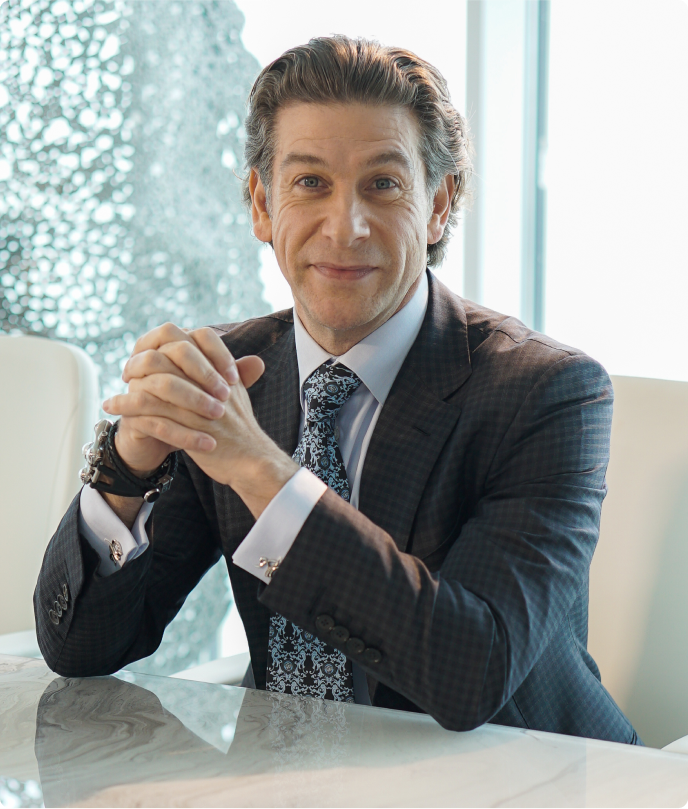
Dr. Adel Quttainah
- Board-Certified Plastic & Reconstructive Surgeon
- Founder of Quttainah Medical Center (QMC)
- 20+ Years of Private Clinical and Surgical Experience
- International Facial Plastic & Body Contouring Expert
Dr. Adel Quttainah is an exceptionally qualified Western-trained plastic and reconstructive surgeon specializing in complex facial rejuvenation, advanced breast aesthetics and whole body contouring procedures. After graduating from specialized surgical training at leading medical centers in Canada, he moved his broad clinical knowledge to the patients in the Middle East.
Dr. Adel Quttainah is a leading expert in advanced cosmetic and reconstructive surgery and is known for his structural, anatomic approach to the face. He was one of the first in the area to create total integrated aesthetic setups that maintain absolute facial harmony while delivering long-term, natural, and beautiful looks to more complex facial rejuvenation treatments like deep plane facelifts.
Medical Disclaimer
This article is for informational purposes only and is not a substitute for professional medical advice, diagnosis, or treatment. Always seek the advice of a qualified health provider with any questions you may have regarding a medical condition. Medically reviewed by Dr. Adel Quttainah